President Biden issues asylum restriction measures for migrants crossing the border

July 5, 2024

Following significant pressure on Biden due to his stances regarding the immigration crisis in the United States, on June 4th, the president issued a broad executive order aimed at stemming the record influx of immigrants at the US-Mexico border, which has left him politically vulnerable in an election year.

According to the BBC, under the order, which went into effect at 12:00 a.m. on June 6th, officials can swiftly expel immigrants entering the United States illegally without processing their asylum requests. «This will occur once a daily threshold is reached and the border is ‘overwhelmed’,» the White House said in a statement.

During a meeting with some mayors from border cities, President Biden said, «This action will help us regain control of our border.»

However, while opposition parties deem the measures insufficient, activists find them unfortunate. Jennie Murray, president and CEO of the National Immigration Forum, stated, «The policy is steering the immigration conversation in an increasingly restrictive direction.»

Pramila Layapal, chair of the congressional progressive caucus, expressed being «deeply disappointed» by the executive action, calling it «a step in the wrong direction.»

Quoting the BBC, «Mexican media outlets have described Biden’s measure as one of the toughest policies, although President Andrés Manuel López Obrador tried to downplay it, arguing that economic and cultural exchange made border closure ‘impossible.'»

«In remarks to reporters on Tuesday, senior administration officials rejected comparisons with Trump-era policies, stating that the new rules would only apply during periods of increased arrivals. They mentioned exemptions would be made for unaccompanied children and trafficking victims. Meanwhile, Republicans have criticized Biden’s border plan as an election-year ploy and advocated for tougher measures.»

The country and the immigrants en route are awaiting how this measure will unfold in the coming days and all its short, medium, and long-term repercussions.

For guidance and support regarding your immigration matters, contact Pikes Peak Immigration at 719-602-4477.
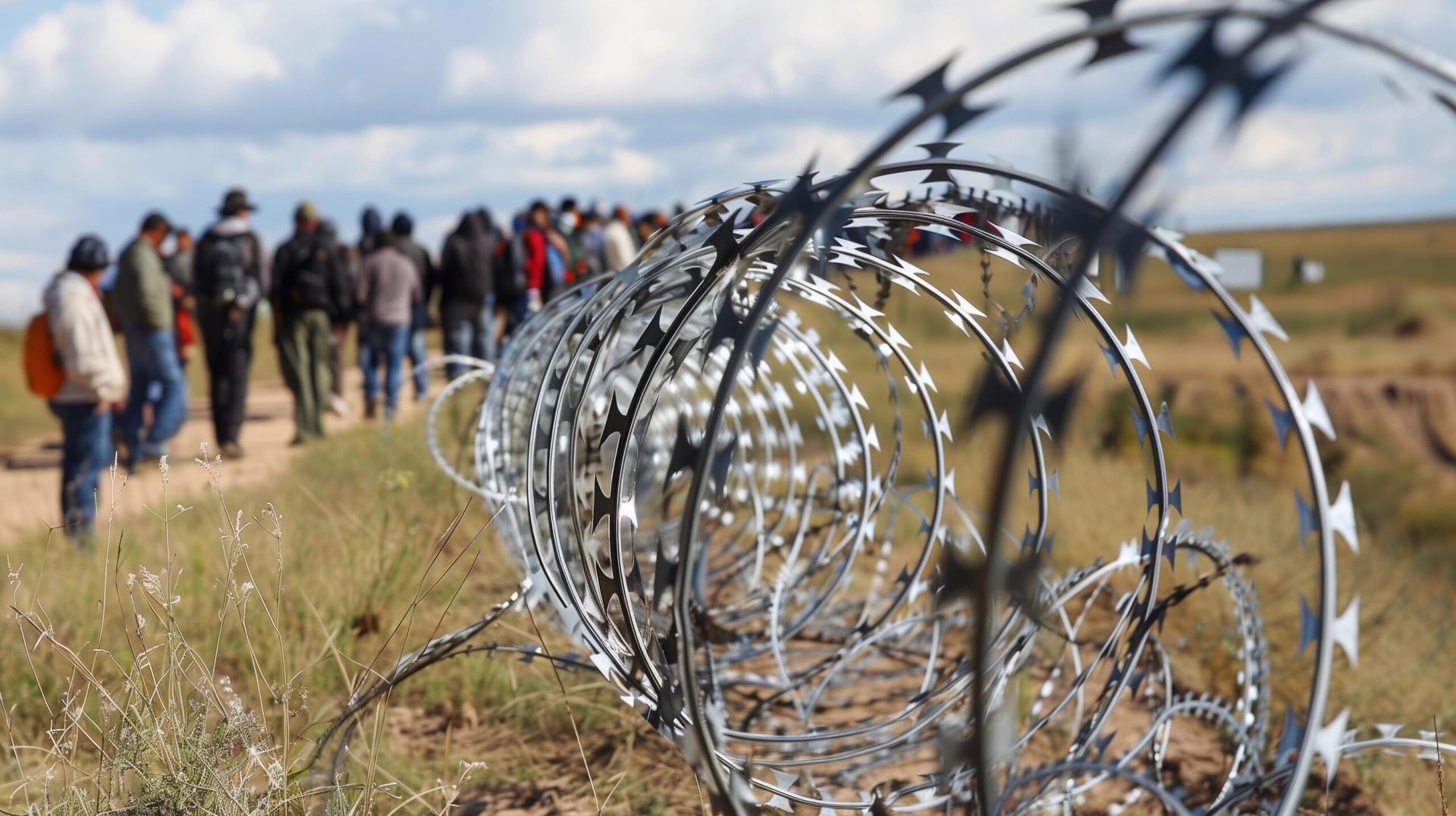
A group of people are walking behind a barbed wire fence.
President Biden issues asylum restriction measures for migrants crossing the border
June 12, 2026
Major Victory for Employers, Universities, and Highly Skilled Foreign Workers
By 7070266136 May 21, 2026
Rising immigration enforcement, policy changes, and growing uncertainty are discouraging many lawful permanent residents from pursuing the protection and stability that U.S. citizenship is meant to provide.
By 7070266136 May 11, 2026
Various recent media outlets confirm that a new rule by the Federal Motor Carrier Safety Administration (FMCSA), under the U.S. Department of Transportation, prevents immigrants with work authorization—including asylum seekers, refugees, and DACA recipients—from obtaining or maintaining commercial driver’s licenses (CDLs), affecting hundreds of thousands of drivers. Reports from outlets such as The Washington Post, The Guardian, and CalMatters indicate that the measure is already causing the loss of licenses and jobs, as well as potential impacts on the supply chain. Meanwhile, labor and legal organizations have filed lawsuits, such as Rivera Lujan v. FMCSA , arguing that the rule is illegal, discriminatory, and severely harms the livelihoods of thousands of families. The administration implemented a rule that prevents asylum seekers, refugees, and DACA recipients from obtaining or renewing CDLs.  Lawsuits say it will “destroy livelihoods” A transportation-focused publication confirms the language used by plaintiffs: Attorneys stated that the rule “threatens to destroy the livelihoods” of thousands of drivers. It explains that asylum seekers, refugees, and DACA recipients are excluded. Real impact: loss of licenses and jobs A recent CalMatters report shows that this is already happening: Thousands of immigrant truck drivers have already lost their licenses in California. Many have been left unemployed and in legal uncertainty. It is estimated that up to 61,000 could lose their licenses in that state alone. Economic and industry effects Driving schools report a sharp decline in student enrollment due to the new rules. Companies and analysts warn that the measure reduces the workforce and may increase costs. Implementation of the rule (key detail) Legal and regulatory sources confirm: The rule went into effect on March 16, 2026. It only allows CDLs for certain visa types (H-2A, H-2B, E-2). Other work-authorized statuses no longer qualify. Recently, The Guardian published an article analyzing the impact of this measure on driving schools. Start CDL, a driving school founded by immigrants Asyl Kushnir and Gene Moik, is facing possible closure due to a sharp decline in student enrollment following new restrictions implemented during the administration of Donald Trump. Enrollment dropped from nearly 100 students per month to just 25–30, seriously affecting revenue despite high demand for drivers. According to its owners, the changes have created confusion and reduced access for immigrants with work permits—such as asylum seekers, refugees, and DACA recipients—who previously saw trucking as a stable job opportunity. This serves as a small example of the different angles from which this new policy must be analyzed. In summary ✔️ The rule exists and is already in effect ✔️ It directly affects immigrants with work authorization ✔️ There are active lawsuits (such as the one you mentioned) ✔️ Media reports confirm real losses of jobs and licenses
More Posts →